5 Paintbrush Techniques for Beginners A Simple Guide

5 Paintbrush Techniques for Beginners: A Simple Guide

Staring at a blank canvas with a brush in your hand can feel exciting… and a little intimidating. You’ve got the paint, but how do you make it do what you want? 

The secret isn’t in buying the most expensive gear; it’s in understanding a few foundational paintbrush techniques for beginners. Learning how to hold your brush and understanding its capabilities is the first real step to unlocking your creativity. 

This guide will walk you through those first essential strokes, helping you go from nervous beginner to confident artist.

What Brushes Do I Even Need?
What Brushes Do I Even Need

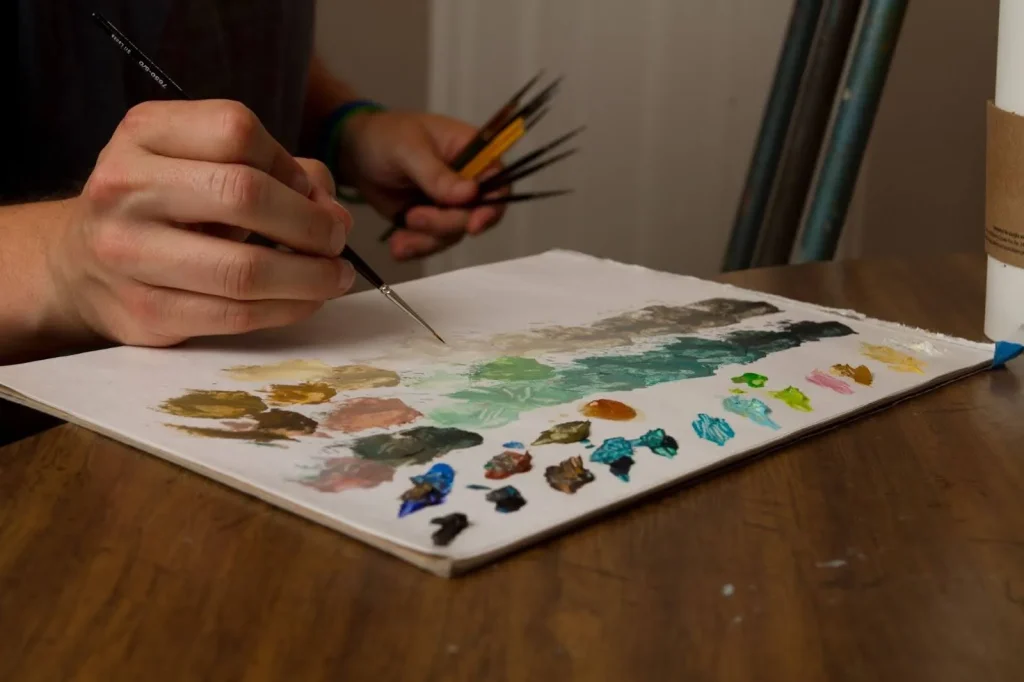
Before we get into the how, let’s quickly look at the what. You don’t need 50 brushes to start. You just need a few good, reliable ones. For most beginner acrylic or oil painting, the three types will cover almost everything you want to do.

Here is a simple breakdown of the “starter set”:

Brush Type

What It Looks Like

Best For…

Flat Brush

Wide and flat with a straight edge.

Broad strokes, filling in large areas, and painting sharp, straight edges like buildings or horizons.

Round Brush

Has a round base and a pointed tip.

Details! Use the very tip for fine lines (like branches) and press down a little for thicker, bolder strokes.

Filbert Brush

A flat brush with a rounded, oval top.

This is a great all-rounder. It’s perfect for blending and creating soft, rounded edges, like flower petals or clouds.

How to Hold Your Paintbrush (It Matters!)

How you hold your brush can completely change your painting style. There is no single “correct” way, but here are two main approaches.

For tight control and painting small details, hold the brush handle close to the bristles, just like you would hold a pencil or pen. This utilises the small muscles in your fingers and wrist, allowing for high precision.

For more expressive, loose, and flowing strokes, hold the brush further back, towards the end of the handle. This engages your entire arm and shoulder, making your marks more gestural and confident.

Essential Paint Brush Techniques to Try Today
Essential Paint Brush Techniques to Try Today

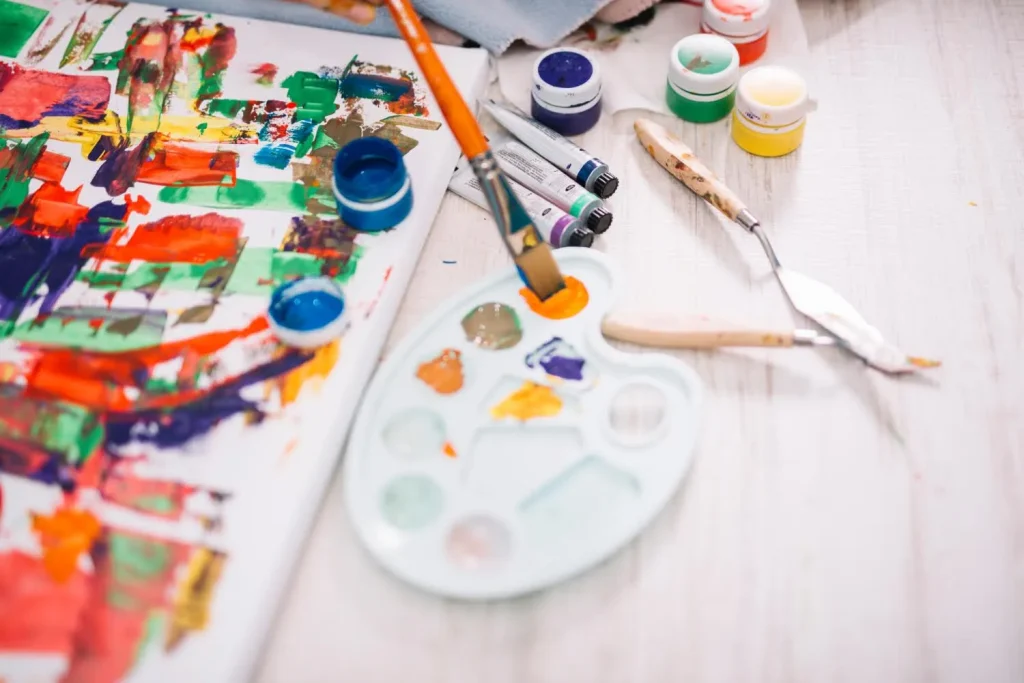
Now for the fun part. These paintbrush techniques are the building blocks for almost any painting.

1. Dry Brushing

  • What it is: A simple way to create amazing texture. You use a brush that is mostly dry, with only a very small amount of thick paint on it.
  • How to do it: Dip your brush (a flat brush is ideal for this) into a small amount of paint, then wipe most of it off on a paper towel. Now, drag the brush lightly across your canvas.
  • The result: You’ll get a broken, scratchy stroke that lets the colour underneath show through. It’s perfect for painting things like wood grain, distant grass, or wispy clouds.

2. Stippling

  • What it is: Building up colour and texture using lots of tiny dots.
  • How to do it: Use the tip of a stiff or round brush and, instead of stroking, just “pounce” or “dab” the brush up and down on your canvas.
  • The result: This creates a lovely, speckled texture. It’s an excellent way to paint bushes on a tree, sand on a beach, or a field of flowers.

3. Scumbling
3. Scumbling
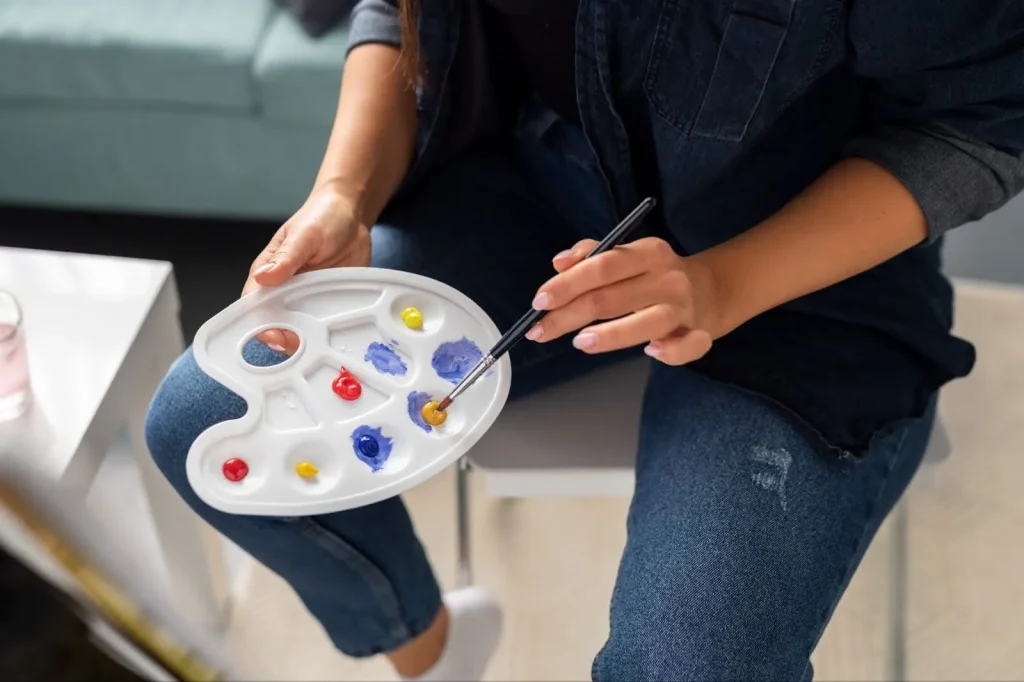
  • What it is: A technique for creating a soft, hazy layer of colour.
  • How to do it: Use a stiff, dry brush with a tiny bit of opaque (non-see-through) paint. Apply the paint in a circular, “scrubbing” motion over another dry colour.
  • The result: This lets the bottom colour peek through. It’s a fantastic way to create soft light, mist, or add a subtle glow to an object.

4. Wet-on-Wet
4. Wet-on-Wet
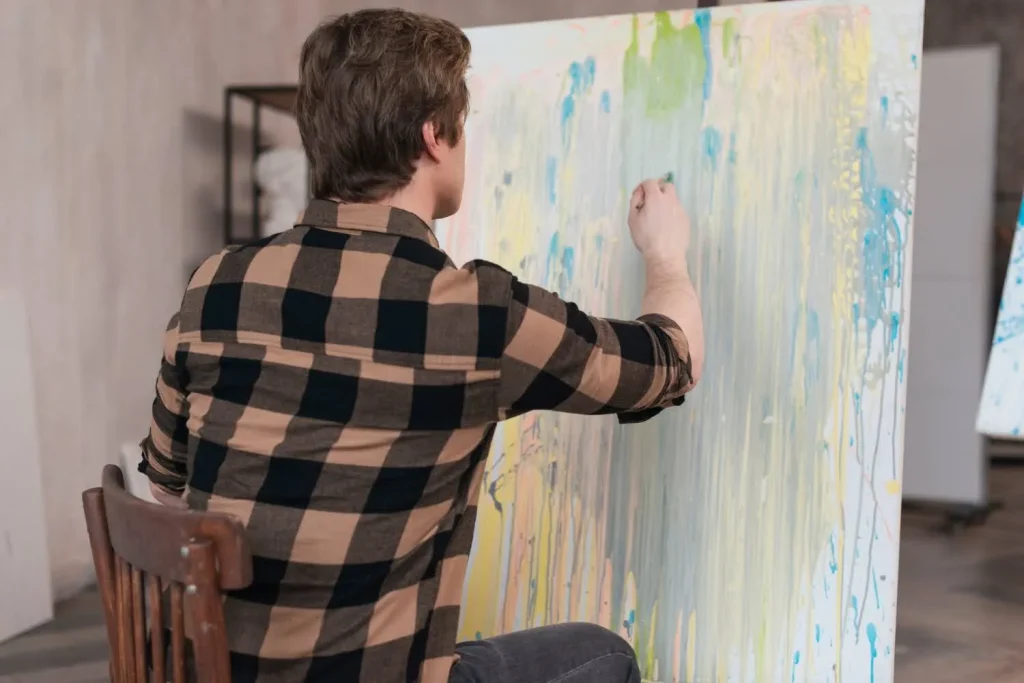
  • What it is: This technique is exactly what it sounds like: applying wet paint onto a layer of paint that is also still wet.
  • How to do it: Put down a layer of colour, and before it dries, add another colour right next to or on top of it.
  • The result: The colours will bleed into each other, creating soft, beautiful blends. This is the secret to those lovely smooth gradients you see in skies and sunsets.

5. Blocking In
5. Blocking In
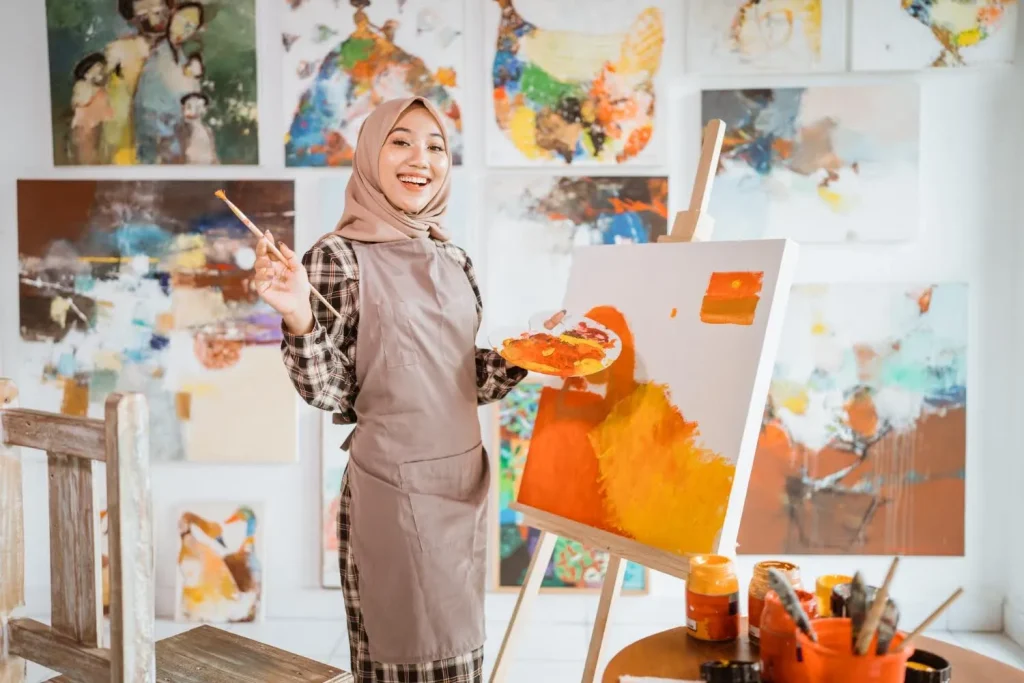
  • What it is: This is less a “technique” and more the first stage of a painting. It’s about building the foundation.
  • How to do it: Use a flat brush to “block in” the main, simple shapes of your painting with colour. Don’t worry about any details, just focus on the big areas of light and dark.
  • The result: It gives you a “map” for your painting. It’s much easier to add details later once all your main shapes are in place.

A Quick Note: How to Care for Your Brushes

Good brushes are an investment, so you want to look after them! The most important rule is to never let paint dry on them.

For acrylics, wash your brushes with soap and lukewarm water immediately after you’re done. For oil paints, you’ll need to clean them with a solvent (like turpentine) first, then wash them with soap and water.

Always reshape the wet bristles with your fingers so they dry in their original shape, and let them dry flat, not standing up in a jar.

Conclusion About Paintbrush Techniques for Beginners

The most important of all paint brush techniques is just to be brave and try. There is no right or wrong way—only your way. Every stroke you make teaches you something new.

So, grab your brush, be bold, and just have fun with it. You might be surprised at what you can create. Find your unique artistic style with us at Art Pazionate.

Ready to put these techniques into practice? Art Pazionate offers a range of art classes for all ages, designed to help you explore these techniques in a fun and supportive space.

Contact us today to join a class!

Frequently Asked Questions About Paintbrush Techniques for Beginners

What Is The Easiest Painting Technique For A Beginner? 

“Blocking in” is a great first step. It helps you get used to the paint and brush without the pressure of details. For a specific effect, “dry brushing” is also very easy and gives you a wonderful, textured result with very little effort.

How Do You Achieve Smooth Strokes With a Paintbrush? 

There are two keys. First, ensure your brush is loaded with sufficient paint. Second, use a confident, consistent motion. For very smooth blends, the “wet-on-wet” technique is best, as it allows two colours to mix seamlessly on the canvas.

What Is The Difference Between A Flat And A Round Brush? 

A flat brush features a wide, square tip, ideal for creating broad strokes and sharp, straight lines. A round brush has a round base that tapers to a fine point, making it ideal for painting details and varied lines.

Why Is My Paint Not Sticking To The Canvas? 

This can occur for several reasons. Your canvas might not be primed appropriately (most store-bought canvases are, but some are not). More commonly, you might be trying to paint a new layer over a previous layer that is still wet and “slippery.”
Palette Knife Painting Techniques A Beginner's Guide_11zon

Palette Knife Painting Techniques: A Beginner’s Guide

Ever looked at a painting and been amazed by those thick, confident strokes of colour? That beautiful, three-dimensional texture that just makes you want to reach out and touch it? It is likely that the artist used a palette knife.

If you’re only used to brushes, the idea of painting with a piece of metal can seem a bit strange. But it’s one of the most freeing palette knife painting techniques you can learn. 

This method is less about capturing tiny, perfect details and more about bold, confident expression. It’s a fantastic way to loosen up your style and create art that is truly, uniquely yours.

What’s the Big Deal About a Palette Knife?

First, let’s clarify something. We’re not talking about the large, trowel-shaped knives used for mixing big piles of paint on your palette (though you can use those!). We’re mostly referring to the smaller, more flexible “painting knives” that resemble tiny, offset spatulas.

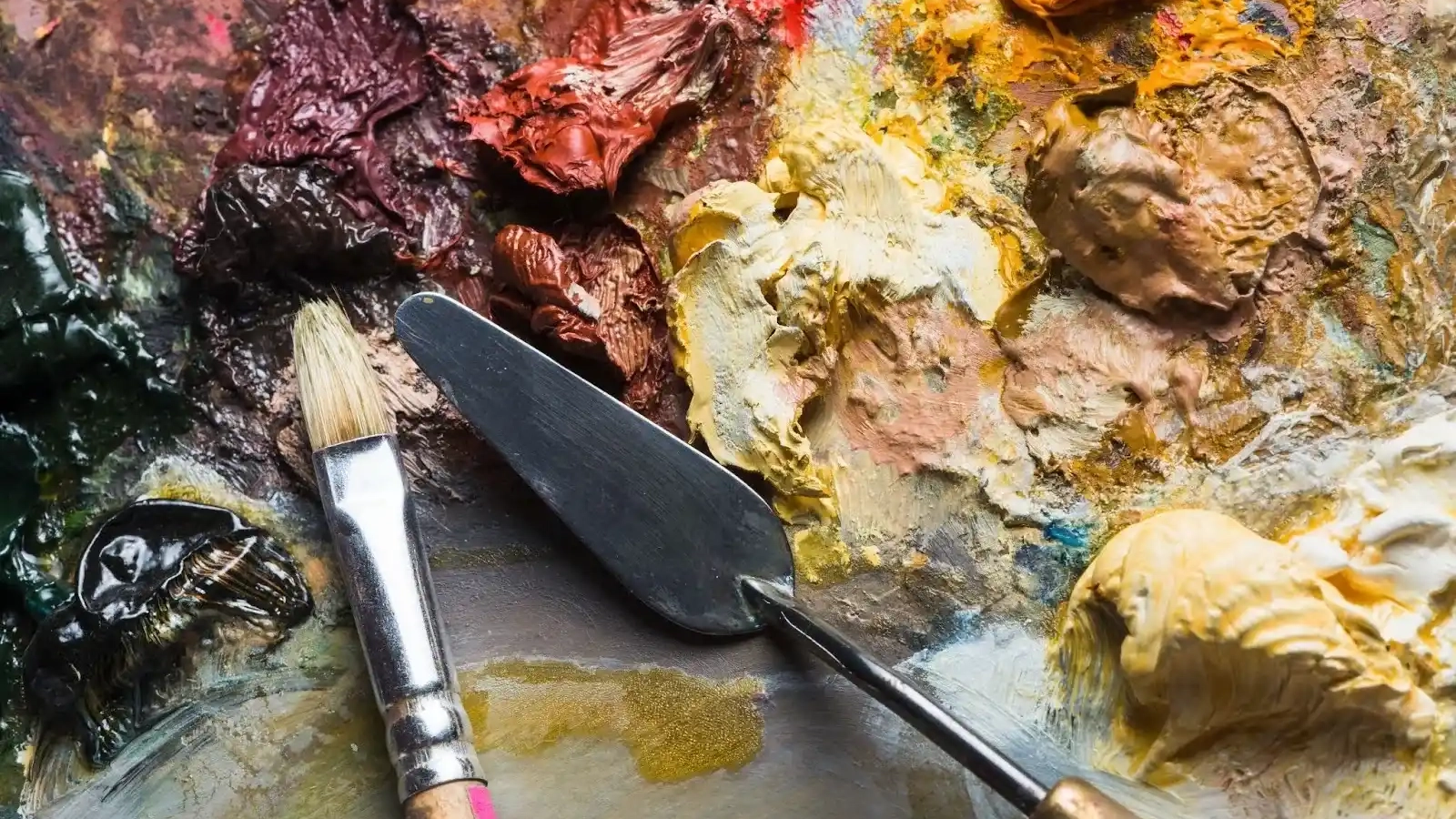
These tools are brilliant because they allow you to apply thick paint (a style called ‘impasto‘) without it getting muddy. Unlike a brush, which blends colours, a knife lays one stroke cleanly on top of another. The result is pure, vibrant colour and incredible texture.

Foundational Painting Techniques with Palette Knife

Foundational Painting Techniques with Palette Knife

Ready to give it a go? The key is to be confident. Don’t be nervous; there is no “wrong” way, only your way. Hold the knife lightly, and remember that the angle is everything.

Here are a few foundational painting techniques palette knife artists use all the time:

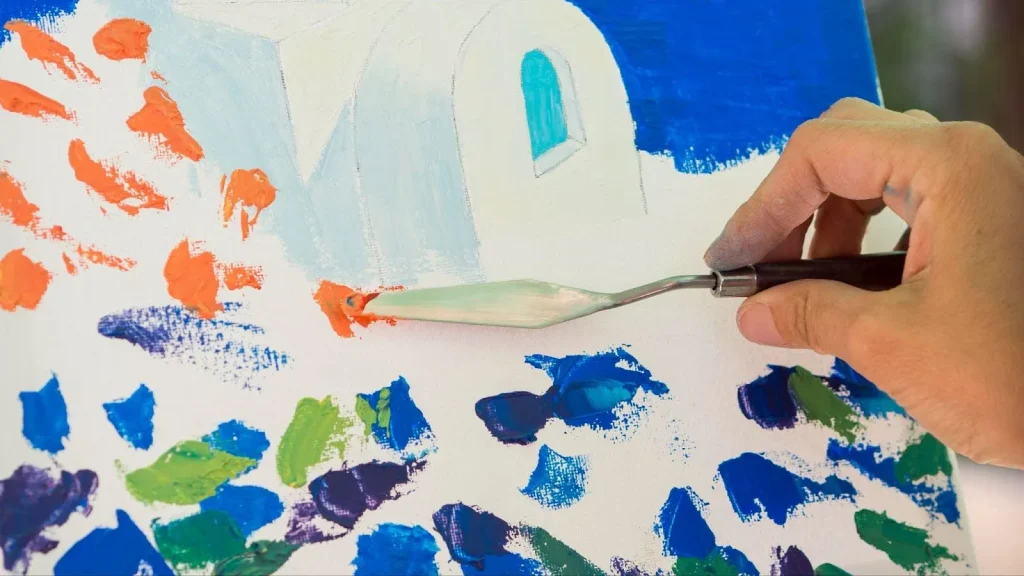
  1. The Flat Drag: This is a great starting point. Scoop up a nice blob of paint on the bottom of your knife blade. Hold the knife almost parallel (flat) to your canvas and gently drag it across the surface. This is perfect for creating smooth, blocky areas of colour, like a calm sky or still water.
  2. The Thick Dab (Impasto): This is where the real fun begins. Use the tip or the flat bottom of your knife to pick up a thick chunk of paint. ‘Dab’ it onto the canvas and just leave it. Don’t try to smooth it out! Let that peak of paint sit there in all its glory. This is how you get those chunky, touchable flower petals, crashing waves, or rugged mountain textures.
  3. Edge Work for Sharp Lines: This is perfect for details. Use the thin, long edge of your knife to apply paint. You can create surprisingly sharp, clean lines. This technique is fantastic for painting tree branches, building outlines, fences, or defining a sharp horizon.
  4. Scraping (Sgraffito): This technique involves removing paint rather than adding it. After you’ve applied a layer (or several layers) of paint, use the clean edge or tip of your knife to scrape through it. This reveals the canvas or the colours underneath. It’s a wonderful way to add fine details like blades of grass, boat masts, or signatures.

A Few Extra Tips

  • Be Generous with Paint: These painting techniques with palette knife work best when you’re not stingy with your paint. You need those thick applications to build texture.
  • Keep it Clean: Wipe your knife on a rag or paper towel between strokes, especially when changing colours. This keeps your application clean and stops colours from getting muddy.
  • Don’t Overwork It: The beauty of knife painting is its spontaneity. Apply a stroke and let it be. If you fuss with it too much, you’ll lose that fresh, expressive quality.

Mixing: On the Palette or On the Canvas?

  • On the Palette: You can mix colours on your palette just as you would with a brush. Use the flat of your knife to mash and swipe the colours together until you get a uniform new shade.
  • On the Canvas: This is one of the most exciting painting techniques with a palette knife. Apply two (or more) different colours directly to the canvas, side by side. Then, take your clean knife and swipe through them once. This creates a stunning, broken-colour effect that looks incredibly professional and vibrant.

How to Hold the Knife and Load Your Paint

The “how” is simpler than you think.

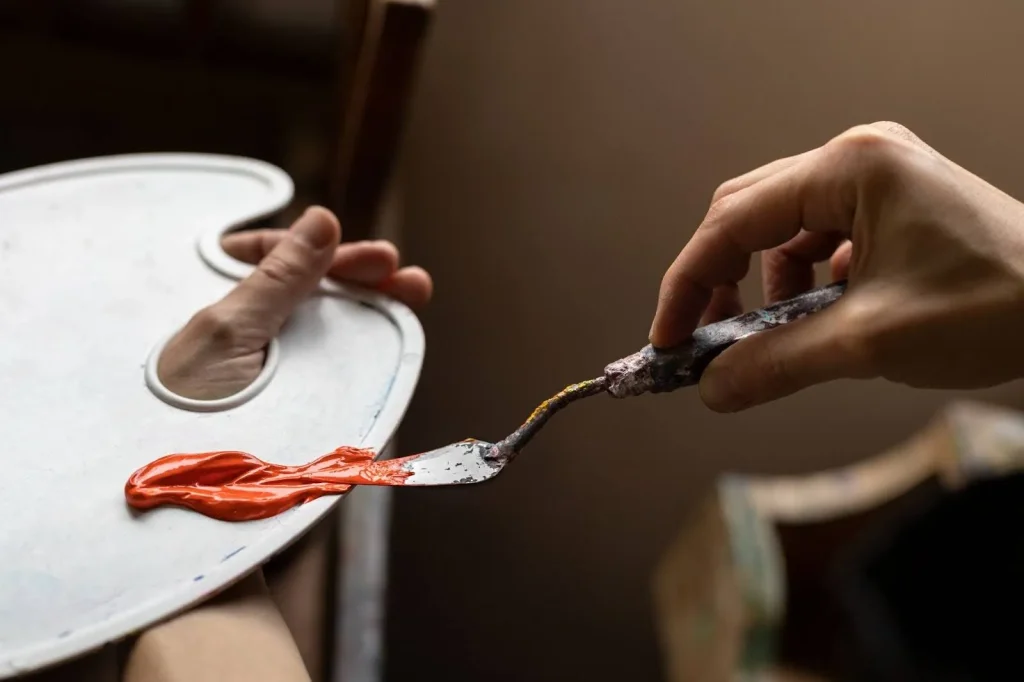
  • Holding the Knife: Don’t hold it like a pen. Hold it like you’re holding a small dinner knife, with the handle in your palm and your index finger resting on the top of the bent ‘crank’ for control.
  • Loading Paint: This is the most important part. Don’t dip your knife into the paint like you’re spooning out jam. Instead, lay the long, bottom edge of your knife next to your paint blob and scrape sideways. This “loads” a nice bead of paint onto the bottom edge of the knife while keeping the top clean.

What You’ll Need to Get Started Painting with a Palette Knife

What You’ll Need to Get Started Painting with a Palette Knife

Before you jump in, it helps to have the right gear. The good news is, you don’t need much.

  • Painting Knives: Don’t be overwhelmed by the shapes and sizes. A great starter knife is a metal, diamond-shaped (or ‘trowel’) one, about 1-2 inches long. Metal knives are superior to plastic ones, as they offer more flexibility and provide better control.
  • Paint: You need thick paint. Heavy-body acrylics or oil paints are perfect because they are stiff and will hold their shape, creating those lovely peaks and ridges.
  • A Sturdy Surface: Because you’ll be applying paint with a bit of pressure, a standard stretched canvas can be a bit ‘bouncy’. A canvas board or a primed wood panel is a fantastic, firm surface for a beginner.
  • Your Palette: You’ll need a flat surface for your paint blobs. A traditional wooden palette, a sheet of glass, or even a disposable paper palette pad will work perfectly.
  • Rags: You will need plenty of paper towels or old rags. You’ll need to wipe your knife constantly.

Common Mistakes (And How to Fix Them)

It’s normal to make a few ‘happy accidents’ along the way. Here are the most common ones:

  • Making “Mud”: This happens when you “overwork” the paint. You dab it, then you swipe it, then you dab it again until all the colours have blended into a dull brown or grey. 

The fix: Be confident! Apply a stroke and let it be. If you don’t like it, scrape it off completely and try again.

  • Being Too Timid: Using tiny specks of paint won’t give you that bold, textured look. 

The fix: Be generous! Squeeze out more paint than you think you need. It’s all about that thick application.

  • Pressing Too Hard: You are not icing a cake or plastering a wall. A hard-pressed stroke will just scrape the paint right off. 

The fix: Use a light touch. Let the paint glide off the knife onto the canvas.

Conclusion About Palette Knife Painting Techniques

The most important thing about painting with a palette knife is to embrace the process and have fun. Let go of the need for perfection and just enjoy the feeling of spreading paint like thick icing on a cake.

You’ll be surprised at the stunning, expressive art you can create. It’s all about discovering your own style, and we hope these tips help you start your creative journey at Art Pazionate.

Ready to try it for yourself? Art Pazionate offers welcoming and fun art classes for adult beginners and creative classes for kids, all designed to help you explore your unique artistic voice.

Contact us today to start your art class!

Frequently Asked Questions About Palette Knife Painting Techniques

What Kind Of Paint Is Best For Palette Knife Painting? 

Heavy body acrylics or oil paints are ideal. You need a paint that is thick and can hold its shape (what’s called ‘high viscosity’). Watercolours or thin fluid acrylics won’t work, as they lack the structure to create texture.

Can You Use A Palette Knife With Watercolour? 

Not really for painting. A palette knife is sometimes used for mixing watercolours on a palette, but it’s not used to apply the paint to paper, as watercolour relies on transparency and water, not thick texture.

How Do You Clean A Palette Knife? 

It’s wonderfully easy! For acrylics, simply wipe the excess paint off with a paper towel, and then wash the rest with soap and water. For oil paints, just wipe the knife completely clean with a rag or paper towel.

What Is The Difference Between A Palette Knife And A Painting Knife? 

People often use the terms interchangeably. Technically, a ‘palette knife’ is usually straight with a rounded tip, designed for mixing paint on your palette. A ‘painting knife’ has a “crank” or bend in the handle, which keeps your knuckles out of the wet paint while you work on the canvas. Both can be used for painting!

Do You Need To Use A Lot Of Paint? 

Yes, generally you will use more paint than you would with a brush. This is because the goal is to build up thick, visible layers of texture. It’s best to squeeze out generous amounts of paint onto your palette before you start.

Practice Mindfulness While Learning Art

Art has always been a therapeutic activity that offers a unique form of expression and relaxation. However, combining art with mindfulness can transform the learning experience into something even more profound. Mindfulness—being fully present and engaged in the moment—can significantly enhance your journey of mastering art techniques. It not only enriches the creative process but also deepens the connection between your mind, body, and the artwork itself.

Let’s explore how practicing mindfulness while learning art techniques can elevate both your artistic skills and overall well-being.

Understanding Mindfulness in Art

Mindfulness is about paying attention to the present moment without judgment. When applied to learning art, it involves focusing on each stroke, texture, and color choice with a heightened sense of awareness. Rather than just aiming for a perfect result, mindfulness encourages you to be present with the process and notice how different techniques feel in your hands.

Being mindful in art isn’t about creating a masterpiece; it’s about immersing yourself in the creative experience. Each brushstroke or pencil line becomes an opportunity to connect with the present moment and engage with your inner emotions.

Benefits of Mindfulness in Learning Art

  • Reduced Stress and Anxiety: Creating art can be a calming activity on its own, but adding mindfulness to the mix significantly boosts its stress-relieving effects. When you focus on the process instead of the outcome, you release pressure and allow creativity to flow freely.
  • Enhanced Focus and Patience: Mindfulness helps you stay attentive to details in your artwork. It also fosters patience as you work through the intricacies of different techniques, leading to a deeper understanding and mastery of skills.
  • Improved Self-Expression: By being present with your feelings and thoughts while you create, your artwork can become a true reflection of your emotions. This form of expression can be therapeutic, providing a safe space for self-reflection.
  • Increased Confidence: Practicing mindfulness allows you to appreciate small achievements in your progress. Recognizing your growth, even in subtle improvements, boosts confidence and motivation.

Ways to Incorporate Mindfulness into Art Practice

  • Start with a Mindful Warm-Up: Begin each session by centering yourself. Take a few deep breaths and consciously relax your body. Spend a few moments observing your tools—the texture of the paper, the color of the paint, or the shape of the brush—before you start creating. This helps you settle into the present moment and tune out distractions.
  • Embrace Slow, Intentional Movements: When working with different art techniques, slow down and pay attention to the motions of your hand. Whether you’re drawing, painting, or sculpting, try to notice the sensation of the materials and the way they interact with your tools. This approach allows you to become more aware of how different techniques affect the final piece.
  • Practice Non-Judgmental Observation: It’s easy to be critical of your work, especially when learning new skills. However, mindfulness encourages you to observe your art without judgment. If a mistake happens, acknowledge it without frustration, and see it as a part of the learning journey. Ask yourself what the mistake can teach you and how it can be incorporated creatively.
  • Focus on Breathing While Creating: Incorporating mindful breathing into your art practice helps you stay grounded. If you find yourself becoming frustrated or impatient, take a step back, breathe deeply, and return to your work with a fresh perspective. This not only helps you stay calm but also enhances your ability to focus.

Combining Mindfulness with Different Art Techniques

  • Drawing and Sketching: When sketching, pay attention to the feel of the pencil against the paper, the flow of your lines, and the pressure you apply. Let each line be a reflection of the moment you are experiencing. Sketching becomes less about perfection and more about capturing the essence of what you see or feel.
  • Painting: Focus on the movement of your brush and the blending of colors. Observe how different strokes create varied textures and effects. Engage all your senses in the process—notice the smell of the paint, the colors you’re mixing, and the feeling of the brush against the canvas.
  • Sculpting: Mindfulness can be especially powerful when sculpting, as it involves a lot of tactile sensation. Pay attention to the way the material responds to your touch. Notice the texture, the resistance, and the transformation that occurs as you shape it.

Mindfulness Exercises for Artists

  • Color Meditation: Choose a color that resonates with your current mood or state of mind. Spend a few moments focusing on that color and exploring different shades. Paint or draw with that color, allowing your emotions to guide your movements. Notice how your feelings change as you work.
  • Body Awareness While Creating: Pay attention to how your body feels while you work. Notice the position of your hands, the tension in your shoulders, or the way your breath flows. This practice encourages you to stay physically present and can help prevent discomfort or fatigue.
  • Creative Journaling: Use a sketchbook as a mindfulness journal. Each day, create a small artwork that represents your mood, thoughts, or a significant event. Reflect on what you felt during the process and how it influenced the final result.

Overcoming Common Mindfulness Challenges in Art

  • Dealing with Distractions: It’s natural for the mind to wander, especially when learning a new skill. When distractions arise, gently bring your focus back to the art in front of you. Use your breath or the texture of your tools to ground yourself.
  • Letting Go of the End Result: It can be challenging to shift the focus from the outcome to the process. Remind yourself that the goal of mindfulness is to enjoy and engage with the present moment. The skills will improve over time, but the experience of being fully present is invaluable.

Conclusion

Combining mindfulness with art techniques creates a holistic approach to learning and creativity. It not only improves technical skills but also enhances mental clarity and emotional well-being. By focusing on the process rather than just the result, you’ll find greater joy in your artistic journey and develop a deeper connection to your work.

So, the next time you pick up a pencil or brush, take a moment to breathe, center yourself, and allow mindfulness to guide your creative flow. Art Pazionate offers Mindfulness Art Workshops such as Painting with Brushes and Painting with Palette Knife for you to practice mindfulness while learning interesting art techniques!

Unlocking Potential: The Transformative Benefits of Kids Art Classes

In a world dominated by standardized tests and academic benchmarks, the importance of art education often takes a backseat. However, beneath the surface lies a treasure trove of benefits that art classes offer to children beyond just creativity and self-expression. From fostering critical thinking skills to enhancing academic performance, the advantages of sending your child to kids art classes are manifold and profound.

Cultivating Creativity and Self-Expression

Art classes provide a nurturing environment where children can unleash their creativity and explore their imagination freely. Through various mediums such as painting, drawing, sculpting, and crafting, kids learn to express their thoughts, emotions, and ideas in a visual language. This process not only boosts their self-confidence but also encourages them to think outside the box and develop innovative solutions to problems—a skill crucial for success in any field.

Enhancing Fine Motor Skills and Coordination

Engaging in art activities requires precise hand-eye coordination and fine motor skills. Whether it’s holding a paintbrush, molding clay, or cutting shapes, children refine their motor skills through repeated practice in kids art classes. These physical movements help in strengthening their muscles, improving dexterity, and enhancing overall coordination, which can benefit them in various day-to-day tasks and activities.

Encouraging Focus and Patience

Art projects often demand patience and persistence, qualities that are invaluable in both academic and real-world settings. From planning and sketching to refining and completing a piece, children learn to stay focused and committed throughout the creative process. Kids art classes teach them the value of perseverance and the satisfaction of seeing a project through to fruition, instilling in them a sense of accomplishment and resilience.

Stimulating Critical Thinking and Problem-Solving Skills

Art is not just about putting colors on paper; it involves critical thinking and problem-solving at every step. Whether it’s experimenting with different techniques, selecting appropriate materials, or making creative decisions, children are constantly challenged to think critically and find innovative solutions to artistic challenges. These cognitive skills transfer beyond the art studio, empowering kids to approach academic tasks and real-life problems with creativity and resourcefulness.

Fostering Cultural Awareness and Appreciation

Art is a universal language that transcends boundaries and cultures. Through exposure to diverse art forms and styles from around the world, children develop an appreciation for different cultures and perspectives. Kids art classes serve as a window to the rich tapestry of human history and heritage, allowing kids to explore the stories, traditions, and symbolism embedded in various artworks. This exposure not only broadens their worldview but also fosters empathy, tolerance, and respect for diversity.

Boosting Academic Performance and Confidence

Research has shown a positive correlation between art education and academic achievement. Engaging in kids art classes stimulates brain development, particularly in areas related to cognition, memory, and spatial reasoning. Moreover, the confidence gained from mastering new skills and receiving recognition for creative achievements translates into improved self-esteem and motivation to excel in other academic subjects.

Nurturing Emotional Intelligence and Well-Being

Art is a powerful medium for processing emotions and fostering self-awareness. Through kids art classes, children learn to express and manage their feelings in constructive ways, whether it’s joy, frustration, sadness, or anger. Art becomes a therapeutic outlet for emotional release and introspection, promoting mental well-being and resilience. Moreover, the sense of accomplishment derived from creating art contributes to a positive self-image and overall happiness.

In a fast-paced world driven by technological advancements and academic pressures, the significance of art education cannot be overstated. Beyond the realm of creativity, Art Pazionate’s kids art classes offer a holistic learning experience that nurtures cognitive, emotional, and social development in children. By sending your kids to our art classes, we not only cultivate their artistic talents but also equip them with essential life skills that pave the way for a brighter and more fulfilling future. So let’s embrace the transformative power of art education and empower children to unleash their full potential.

Learn more about Art Pazionate’s Kids Art Classes or chat with us today!

Exploring the dynamics of Acrylic Painting: Tools and Effects

Acrylic paints offer a versatile and vibrant medium for artistic expression. Within this realm, some artists often paint with either brushes or palette knives on their canvases. Each tool brings its own unique characteristics and challenges to the creative process. In this article, we’ll delve into the differences between painting with brushes versus palette knives, exploring their respective merits and the effects they produce on the canvas.

Brushes: Precision and Fluidity

Brushes have long been the go-to tool for painters, offering precision and control over the application of paint. With brushes, artists can achieve fine details, smooth transitions, and intricate textures. The flexibility of brushes allows for a wide range of techniques, from delicate glazes to bold impasto strokes.

One of the key advantages of using brushes in acrylic painting is their ability to blend colors seamlessly. By layering and mixing paints directly on the canvas, artists can create nuanced gradients and subtle variations in tone. The soft bristles of a brush lend themselves well to blending and feathering, making it easier to achieve a realistic or impressionistic effect.

Additionally, brushes offer a high level of versatility, allowing artists to experiment with different shapes, sizes, and textures. Flat brushes are ideal for covering large areas and creating clean, crisp edges, while round brushes are well-suited for blending and adding details. Fan brushes can be used to create organic textures and soft, sweeping strokes.

Palette Knives: Texture and Expression

Palette knives, on the other hand, offer a more tactile and expressive approach to acrylic painting. These tools consist of a flat, blunt blade attached to a handle, which artists use to apply paint directly onto the canvas. Unlike brushes, palette knives do not have bristles, which allows for more pronounced texture and bold, impasto effects.

One of the defining characteristics of palette knife painting is its textured appearance. By applying thick layers of paint with a palette knife, artists can create rich, sculptural surfaces that add depth and dimension to their work. The blunt edge of the knife can be used to carve and manipulate the paint, resulting in dynamic and expressive marks.

Palette knives also encourage a looser and more gestural painting style. Because they do not offer the same level of precision as brushes, artists must embrace spontaneity and embrace the unpredictable nature of the medium. This can lead to bold, energetic compositions with a sense of immediacy and movement.

Furthermore, palette knives allow artists to work more quickly and intuitively, as they can mix and apply paint directly on the canvas without the need for additional tools. This direct approach can be particularly freeing for artists who prefer to work in a more instinctive and experimental manner.

In the world of acrylic painting, the choice between brushes and palette knives ultimately comes down to personal preference and artistic intent. Brushes offer precision, fluidity, and versatility, making them well-suited for detailed work and subtle blending. Palette knives, on the other hand, provide texture, expression, and spontaneity, allowing artists to create bold, sculptural surfaces with a sense of energy and movement.

Ultimately, many artists find that a combination of both tools yields the most satisfying results. By experimenting with different techniques and exploring the unique qualities of each tool, painters can push the boundaries of their creativity and discover new possibilities within the realm of acrylic painting. Whether wielding a brush or a palette knife, the journey of artistic exploration is as diverse and vibrant as the medium itself.

Art Pazionate offers weekly Acrylic Painting Classes as well as one-off Experiential Painting Workshops for adults who wish to explore and refine their artistic skills in acrylic painting. Chat with us today!