Is Acrylic Painting easy for beginners?

Stepping into the realm of painting can be an exhilarating journey, with countless possibilities waiting to be explored on the canvas. Among the various mediums available, acrylic paint stands out for its versatility and accessibility. But for aspiring artists, a common question arises: Is acrylic painting easy to learn? Let’s delve into this inquiry and uncover the nuances of mastering this vibrant art form.

Understanding Acrylic Painting

Acrylic painting is a dynamic medium that uses pigments suspended in acrylic polymer emulsion. It gained popularity in the mid-20th century for its fast-drying properties, allowing artists to work quickly and layer colors effectively. Acrylic paints offer a wide range of techniques, from thick impasto strokes to delicate washes, making them suitable for both beginners and seasoned artists.

The Ease of Getting Started

One of the primary reasons many beginners are drawn to acrylic painting is its accessibility. Unlike oil painting, which requires extensive knowledge of solvents and mediums, acrylics can be used straight from the tube with water as a thinning agent. This simplicity eliminates the need for elaborate setups and allows newcomers to dive into painting with minimal preparation.

Furthermore, acrylic paints are forgiving and versatile, making them ideal for experimentation. Unlike watercolors, which are notoriously unforgiving, acrylics can be easily corrected by painting over mistakes or scraping away dried layers. This forgiving nature alleviates the fear of making errors and encourages artists to explore their creativity without inhibition.

Learning Curve and Techniques

While acrylic painting offers a relatively low barrier to entry, mastering the medium requires dedication and practice. Like any form of art, proficiency in acrylic painting comes with time and experience. Beginners may encounter challenges such as color mixing, brush control, and understanding the properties of acrylic paints.

Fortunately, numerous resources are available to assist aspiring acrylic painters on their learning journey. From online tutorials and instructional books to community art classes, there are ample opportunities to refine skills and gain valuable insights from experienced artists. Additionally, experimenting with different techniques, such as dry brushing, glazing, and palette knife application, can expand one’s repertoire and deepen their understanding of acrylic painting.

Overcoming Challenges

As with any creative pursuit, encountering challenges is an inherent part of the learning process. Beginners may feel frustrated by initial setbacks or struggle to achieve their desired results. However, perseverance and a willingness to learn are keys to overcoming these obstacles.

Seeking feedback from peers and instructors can provide valuable guidance and encouragement. Constructive criticism helps artists identify areas for improvement and refine their techniques. Moreover, embracing mistakes as learning opportunities fosters growth and resilience in the face of adversity.

The Joy of Expression

Despite the learning curve associated with acrylic painting, the rewards of mastering this medium are boundless. Acrylic paints offer artists a vibrant palette to express their emotions, ideas, and perspectives on the canvas. From bold, expressive strokes to intricate details, each brushstroke tells a unique story and invites viewers into the artist’s world.

Moreover, the process of painting itself can be deeply therapeutic and meditative. Immersed in color and form, artists find solace and fulfillment in the act of creation. Whether painting for personal enjoyment or pursuing a career in the arts, acrylic painting offers a fulfilling outlet for self-expression and creativity.

In conclusion, the question of whether acrylic painting is easy to learn is subjective and multifaceted. While acrylics offer beginners a user-friendly medium to explore their artistic talents, mastering the intricacies of painting requires dedication, patience, and a willingness to embrace challenges. With practice, guidance, and a passion for creativity, aspiring artists can unlock the full potential of acrylic painting and embark on a rewarding artistic journey that transcends boundaries and inspires the imagination.

If you need guidance to get you started, we’d love to journey with you to achieve your artistic goals. Chat with us today or find out more about our Acrylic Painting Classes.
Art isn’t boring – Fun Art Classes for Kids

By: Nika Tay Hui Min

What’s art without some fun? At Artpazionate, we take fun very seriously. If you thought art was just some plain old sit-down activity that makes scribbles with pencils and paintbrushes – well, think again! Our unique art classes for kids are here to show you that “Art isn’t boring!”

Here at Artpazionate, we pride ourselves in teaching and doing art (quite frankly) out-of-the-box. One of the ways we inject creativity and life into our lessons is to go beyond the usual ‘brush-and-canvas’ format, and push the boundaries of what art should look like.

First, let us introduce some of the exciting things we offer in our art classes.

Acrylic Painting

Acrylic paint is an incredibly versatile and beginner-friendly medium. In fact, acrylic paints are so versatile they can be used on a wide range of surfaces – from wood, glass to canvas – which makes it so fun for your kids to explore a variety of painting techniques. The fast-drying paint also makes it easy for children to work and play with.

Due to its’ relatively thicker consistency, Acrylic paint gives children the flexibility to experiment beyond the usual paintbrushes. Allowing them to get creative in utilizing their fingers, hands, and even sponges to create different textures as well as strokes for a truly special and vibrant piece of artwork!

What makes acrylic painting such a great medium? It offers many ‘types’ of paintings!

https://www.facebook.com/ArtPazionate/photos/pcb.2034474543357516/2034474493357521/

Our art classes for kids will be sure to broaden your child’s learning as we dive into various modern and innovative art styles! For all our mini ‘Pablo Picassos’; this art style (pictured below), also known as Cubism, was invented around 1907-08. It will inspire your child to reimagine their world using geometric shapes!

https://www.facebook.com/ArtPazionate/photos/pcb.2018710464933924/2018705261601111

Air-dry Clay making

Clay is another wonderful medium that serves as a great introduction to 3-dimensional (3D) art. Its soft yet malleable texture makes it fun while stimulating and engaging your child’s creativity through touch. They can pinch, mold, roll, flatten, stretch, decorate, build and make their very own 3D artwork from scratch!

Check out the special “World in the Box” where our young artists recreated their imaginary world with clay and paint! At Artpazionate, we are always encouraging our students to explore art in unique ways while nurturing their boldness to create and imagine.

https://www.facebook.com/ArtPazionate/posts/2019656848172619

Paper Crafts and Collages

While art is traditionally associated with paintings, paper is another resourceful and adaptable material. From collage-making to origami, the possibilities with paper are endless! And our art classes for kids do just that – we open your child’s mind and imagination to new possibilities through art!

What’s more, paper-medium artworks are great for developing your child’s fine-motor skills and awareness of color! While also being an incredibly accessible and affordable material – so really, what’s not to love!

https://www.facebook.com/ArtPazionate/photos/pcb.2034474543357516/2034474476690856/
https://www.facebook.com/ArtPazionate/photos/pcb.2034474543357516/2034474446690859/

Interested in signing your kids up for our art classes? Head on over to our weekly art classes for more information or simply register here for a trial today!

Celebrate Earth Day through Upcycling

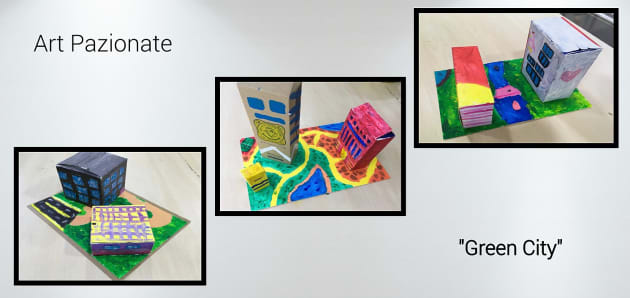
We strongly believe that everyone plays a part in protecting our earth and environment through the 3Rs (reduce, reuse, recycle) and Upcycling. To foster this, we got the kids to create Upcycling artworks, titled Green City, using their unwanted packaging boxes.

These artworks not only look beautiful but they also function as desk organizers and storage boxes! Some of their artworks are also displayed in Twinkl’s Earth Day Virtual Gallery!

View the Virtual Gallery here.

Learn more about our weekly Art Classes for Kids here.

Crafts to do during Christmas

By: Nika Tay Hui Min


Christmas is around the corner! Looking for ways to dazzle your homes yet occupy your active little ones? Scroll down for some simple Christmas crafts you can do with your child that will be sure to bring great fun and unique decors!

A Popping Christmas

Make simple and adorable ornaments from Crafts Meet Kids this Christmas using popsicle sticks! From Santa Claus to Christmas Trees, reindeers and even snowflakes, the possibilities are endless!

Materials You Need:

  • Popsicles Sticks!
  • Color Paper (even leftover craft paper works fine)
  • Pom Poms
  • Twine / Ribbon
  • Cotton Balls
  • Glue
  • Scissors (To cut out desired shapes)

Or any other craft materials you’d like to add for that extra glitter & sparkle!

Finger and Hand Painting

In fact, art and fun can be so simple. Sometimes, all you need is a paper, paint and simply your palms or fingers to create a ‘magical’ artwork! Let your child’s inner artist shine as they paint and stamp to a jolly fun time! 😊

Paint a Christmas scene with a twist

And who says Santa Claus only dressed in red with long-white beards? Artpazionate’s little artist, who loves dinosaurs so much, painted ‘Dino’ as his Ho Ho Ho…Santa during our kids art classes!! Truly, a child’s imagination knows no bounds!

https://www.facebook.com/ArtPazionate/posts/1933977896740515

As we look to unwind and end off this rollercoaster year, let’s remember the reason for the season and immerse in the spirit of giving. Take time to cherish, appreciate your loved ones with more than just gifts but also the precious gift of time and love.

Artpazionate wishes you Merry Christmas and Happy Holidays!

How to get started with Acrylic Painting

By: Nika Tay Hui Min


You would be surprised to find that acrylic painting is a fairly newcomer in the artworld – having just been around since the 1940s. Widely regarded as a beginner friendly medium, no less, acrylic painting continues to be a highly accessible and versatile artform favored by seasoned to professional painters alike.

Due to its’ relatively inexpensive, easy-to-use, easy-to-clean-up and forgiving medium (easier to paint over mistakes), ideal for the art enthusiast who have zero experience in their first painting class. At the same time, acrylic provides a great foundation to foray as well as develop a broad range of art techniques while giving flexibility to experiment with various techniques and even mixed media art.

1. Set aside a time and budget 

Before you start creating any artwork, it is good to know plan and think through how much time and money you are investing and setting aside for your new-found art hobby. Setting aside a time and space to allow yourself to freely create and be intentional in creating is important. And after allocating an estimated budget, let’s get down to the essentials of acrylic painting.

2. Acrylic Supplies – “Behind every masterpiece is a great set of supplies!”

Acrylic Paints

Buying paint can feel like an overwhelming task with so many colors to choose from. In general, getting a good selection of primary colors (red, blue, yellow) is a good start! Include earthy tones into your color kit white, black will be more than sufficient for your initial paints.

It’s also important to note that not all paints are made the same, craft paints though cheap comes at a trade-off in terms of quality and coverage. So, invest in quality student grade or professional grade paints.

If not, to save you the mind-boggling hassle of selecting and choosing your own paints, buy our high-quality yet affordable Pebeo Studio Acrylic Paint Set complete with 12-colors!

Paint Brushes

Similar to selecting paints, getting a varied set of paintbrushes with different tips and sizes is needed for giving your artwork an even background, good coverage to detailing work. You can also purchase our brush set perfect for both acrylic and watercolor painting.

Here’s the good news! Acrylic paints are so versatile you can paint them on almost any surface from the usual canvas, acrylic paper and even tote bags!

3. Learn from a professional – Sign up for an art class!

Even after getting all the essentials and supplies, watching online tutorials and know-how tips, the feeling of staring at a blank canvas and not knowing where or how to start can feel frustrating, if not daunting! Then perhaps, learning from a professional and taking up our Art lessons for adults will take you one step further!

If you are someone who needs that extra helping hand to guide and empower you along your art journey or the occasional painter looking to brush up your craft and techniques, Artpazionate’s specially curated Acrylic Painting Classes will do just that.

Ultimately, art is more than just arriving at the completed product. It is in the entire process from broadening your technical knowledge, conceptualizing an image, to sketching, choosing the colors and thereafter, painting your imagination into reality. That is true art.

For more info, check out our Acrylic Painting Classes here: https://artpazionate.com/adults-and-teens-art/#Acrylic