
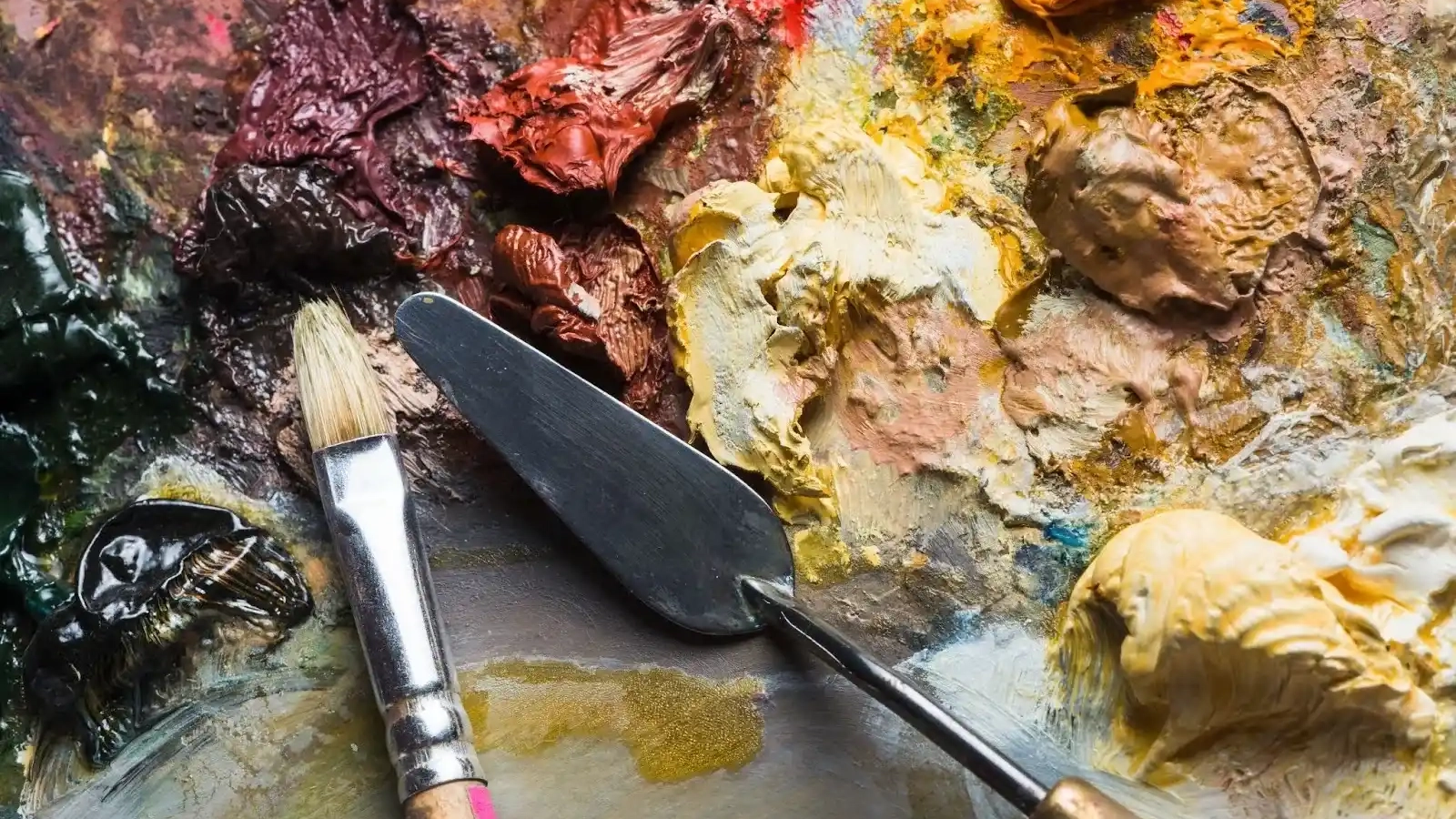
Ever looked at a painting and been amazed by those thick, confident strokes of colour? That beautiful, three-dimensional texture that just makes you want to reach out and touch it? It is likely that the artist used a palette knife.
If you’re only used to brushes, the idea of painting with a piece of metal can seem a bit strange. But it’s one of the most freeing palette knife painting techniques you can learn.
This method is less about capturing tiny, perfect details and more about bold, confident expression. It’s a fantastic way to loosen up your style and create art that is truly, uniquely yours.
What’s the Big Deal About a Palette Knife?
First, let’s clarify something. We’re not talking about the large, trowel-shaped knives used for mixing big piles of paint on your palette (though you can use those!). We’re mostly referring to the smaller, more flexible “painting knives” that resemble tiny, offset spatulas.
These tools are brilliant because they allow you to apply thick paint (a style called ‘impasto‘) without it getting muddy. Unlike a brush, which blends colours, a knife lays one stroke cleanly on top of another. The result is pure, vibrant colour and incredible texture.
Foundational Painting Techniques with Palette Knife
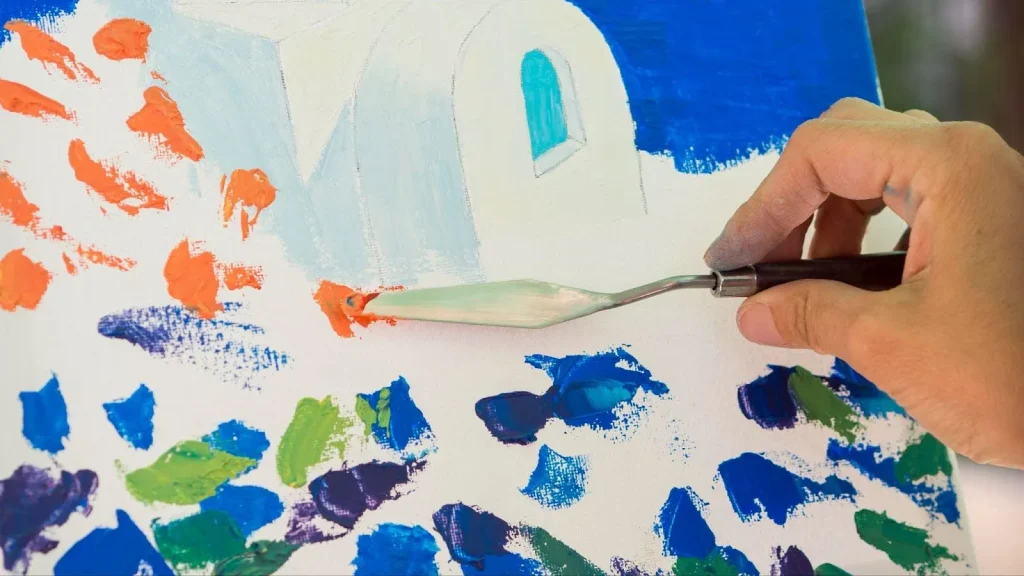
Ready to give it a go? The key is to be confident. Don’t be nervous; there is no “wrong” way, only your way. Hold the knife lightly, and remember that the angle is everything.
Here are a few foundational painting techniques palette knife artists use all the time:
- The Flat Drag: This is a great starting point. Scoop up a nice blob of paint on the bottom of your knife blade. Hold the knife almost parallel (flat) to your canvas and gently drag it across the surface. This is perfect for creating smooth, blocky areas of colour, like a calm sky or still water.
- The Thick Dab (Impasto): This is where the real fun begins. Use the tip or the flat bottom of your knife to pick up a thick chunk of paint. ‘Dab’ it onto the canvas and just leave it. Don’t try to smooth it out! Let that peak of paint sit there in all its glory. This is how you get those chunky, touchable flower petals, crashing waves, or rugged mountain textures.
- Edge Work for Sharp Lines: This is perfect for details. Use the thin, long edge of your knife to apply paint. You can create surprisingly sharp, clean lines. This technique is fantastic for painting tree branches, building outlines, fences, or defining a sharp horizon.
- Scraping (Sgraffito): This technique involves removing paint rather than adding it. After you’ve applied a layer (or several layers) of paint, use the clean edge or tip of your knife to scrape through it. This reveals the canvas or the colours underneath. It’s a wonderful way to add fine details like blades of grass, boat masts, or signatures.
A Few Extra Tips
- Be Generous with Paint: These painting techniques with palette knife work best when you’re not stingy with your paint. You need those thick applications to build texture.
- Keep it Clean: Wipe your knife on a rag or paper towel between strokes, especially when changing colours. This keeps your application clean and stops colours from getting muddy.
- Don’t Overwork It: The beauty of knife painting is its spontaneity. Apply a stroke and let it be. If you fuss with it too much, you’ll lose that fresh, expressive quality.
Mixing: On the Palette or On the Canvas?
- On the Palette: You can mix colours on your palette just as you would with a brush. Use the flat of your knife to mash and swipe the colours together until you get a uniform new shade.
- On the Canvas: This is one of the most exciting painting techniques with a palette knife. Apply two (or more) different colours directly to the canvas, side by side. Then, take your clean knife and swipe through them once. This creates a stunning, broken-colour effect that looks incredibly professional and vibrant.
How to Hold the Knife and Load Your Paint
The “how” is simpler than you think.
- Holding the Knife: Don’t hold it like a pen. Hold it like you’re holding a small dinner knife, with the handle in your palm and your index finger resting on the top of the bent ‘crank’ for control.
- Loading Paint: This is the most important part. Don’t dip your knife into the paint like you’re spooning out jam. Instead, lay the long, bottom edge of your knife next to your paint blob and scrape sideways. This “loads” a nice bead of paint onto the bottom edge of the knife while keeping the top clean.
What You’ll Need to Get Started Painting with a Palette Knife
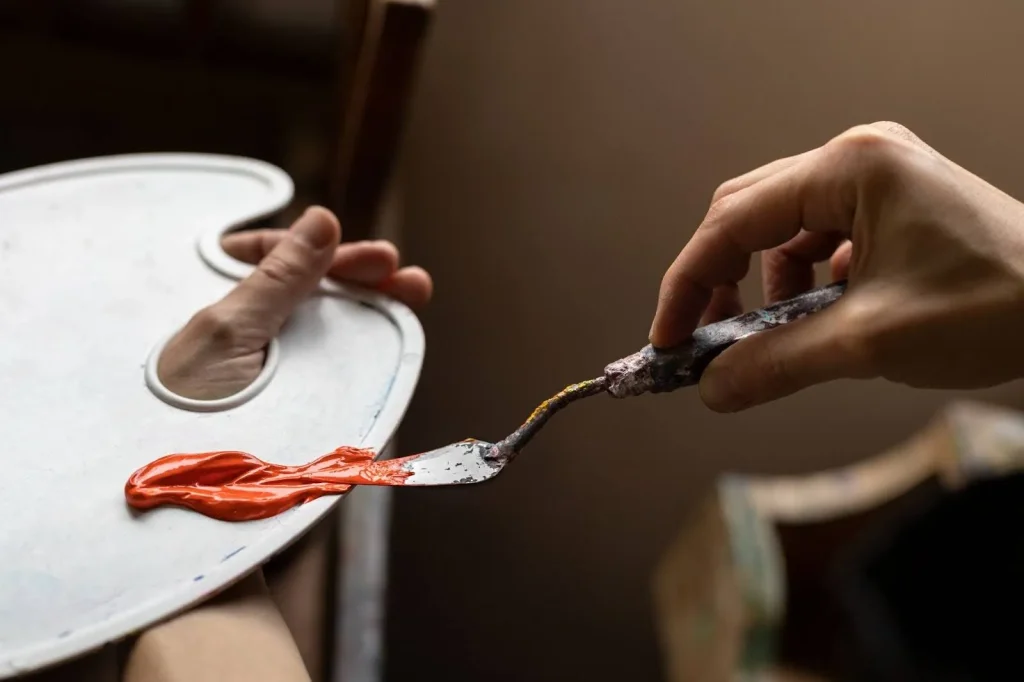
Before you jump in, it helps to have the right gear. The good news is, you don’t need much.
- Painting Knives: Don’t be overwhelmed by the shapes and sizes. A great starter knife is a metal, diamond-shaped (or ‘trowel’) one, about 1-2 inches long. Metal knives are superior to plastic ones, as they offer more flexibility and provide better control.
- Paint: You need thick paint. Heavy-body acrylics or oil paints are perfect because they are stiff and will hold their shape, creating those lovely peaks and ridges.
- A Sturdy Surface: Because you’ll be applying paint with a bit of pressure, a standard stretched canvas can be a bit ‘bouncy’. A canvas board or a primed wood panel is a fantastic, firm surface for a beginner.
- Your Palette: You’ll need a flat surface for your paint blobs. A traditional wooden palette, a sheet of glass, or even a disposable paper palette pad will work perfectly.
- Rags: You will need plenty of paper towels or old rags. You’ll need to wipe your knife constantly.
Common Mistakes (And How to Fix Them)
It’s normal to make a few ‘happy accidents’ along the way. Here are the most common ones:
- Making “Mud”: This happens when you “overwork” the paint. You dab it, then you swipe it, then you dab it again until all the colours have blended into a dull brown or grey.
The fix: Be confident! Apply a stroke and let it be. If you don’t like it, scrape it off completely and try again.
- Being Too Timid: Using tiny specks of paint won’t give you that bold, textured look.
The fix: Be generous! Squeeze out more paint than you think you need. It’s all about that thick application.
- Pressing Too Hard: You are not icing a cake or plastering a wall. A hard-pressed stroke will just scrape the paint right off.
The fix: Use a light touch. Let the paint glide off the knife onto the canvas.
Conclusion About Palette Knife Painting Techniques
The most important thing about painting with a palette knife is to embrace the process and have fun. Let go of the need for perfection and just enjoy the feeling of spreading paint like thick icing on a cake.
You’ll be surprised at the stunning, expressive art you can create. It’s all about discovering your own style, and we hope these tips help you start your creative journey at Art Pazionate.
Ready to try it for yourself? Art Pazionate offers welcoming and fun art classes for adult beginners and creative classes for kids, all designed to help you explore your unique artistic voice.
Contact us today to start your art class!
Frequently Asked Questions About Palette Knife Painting Techniques
What Kind Of Paint Is Best For Palette Knife Painting?
Heavy body acrylics or oil paints are ideal. You need a paint that is thick and can hold its shape (what’s called ‘high viscosity’). Watercolours or thin fluid acrylics won’t work, as they lack the structure to create texture.
Can You Use A Palette Knife With Watercolour?
Not really for painting. A palette knife is sometimes used for mixing watercolours on a palette, but it’s not used to apply the paint to paper, as watercolour relies on transparency and water, not thick texture.
How Do You Clean A Palette Knife?
It’s wonderfully easy! For acrylics, simply wipe the excess paint off with a paper towel, and then wash the rest with soap and water. For oil paints, just wipe the knife completely clean with a rag or paper towel.
What Is The Difference Between A Palette Knife And A Painting Knife?
People often use the terms interchangeably. Technically, a ‘palette knife’ is usually straight with a rounded tip, designed for mixing paint on your palette. A ‘painting knife’ has a “crank” or bend in the handle, which keeps your knuckles out of the wet paint while you work on the canvas. Both can be used for painting!
Do You Need To Use A Lot Of Paint?
Yes, generally you will use more paint than you would with a brush. This is because the goal is to build up thick, visible layers of texture. It’s best to squeeze out generous amounts of paint onto your palette before you start.