
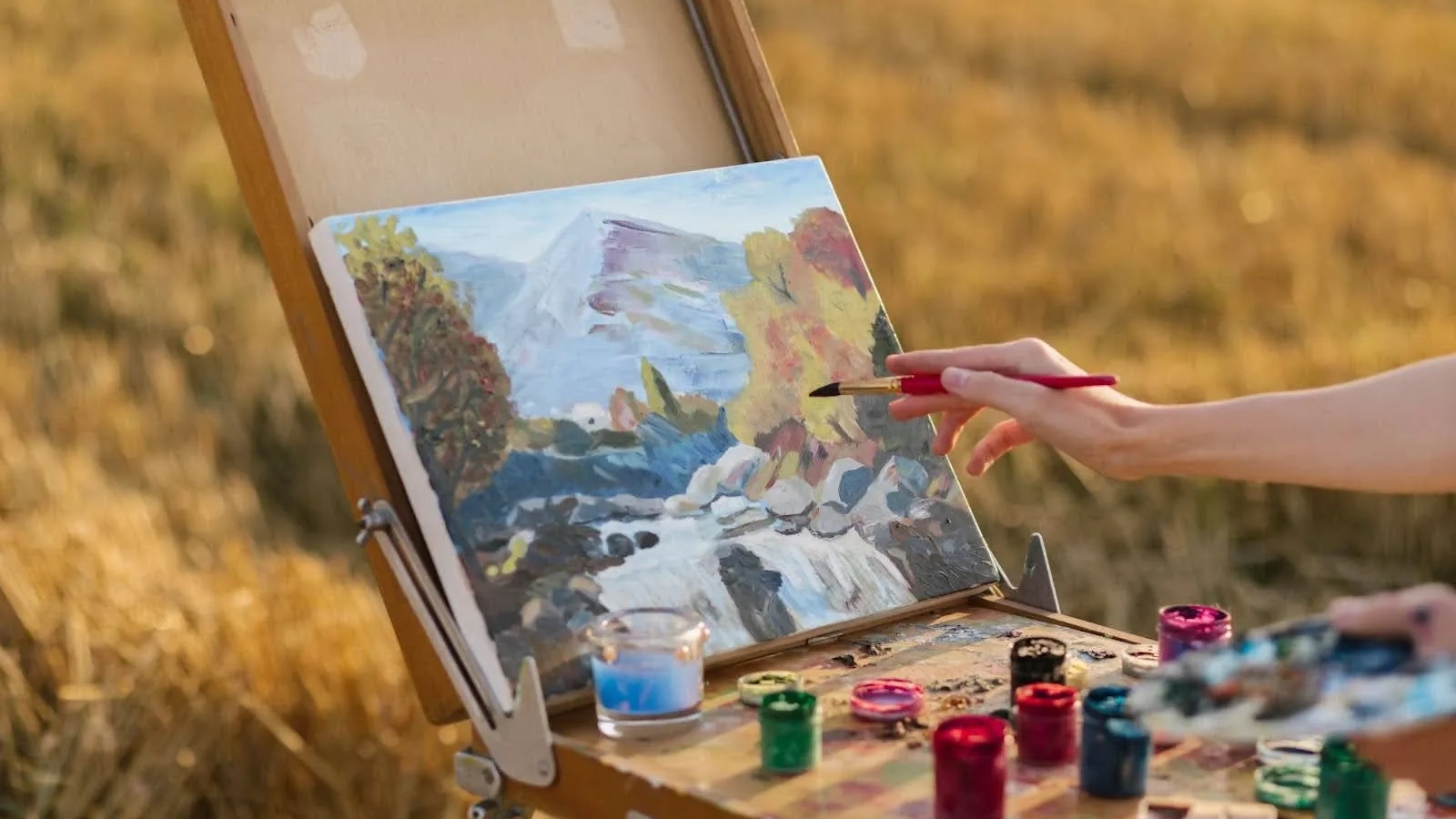
Have you ever stared at a blank sheet of paper, paralysed by the fear of making a mistake you cannot fix? You are not alone.
For many beginners and parents, the pressure to be perfect often stifles the simple joy of creating. This is where gouache painting comes in.
It is often described as the “forgiving medium” because it bridges the gap between structure and freedom.
If you are wondering what a gouache painting is, the simple answer is that it is an opaque watercolour. It dries to a beautiful, velvety matte finish that feels modern yet timeless.
By the end of this article, you will have the confidence to pick up a brush. You will see why this medium is the key to unlocking a new level of artistic confidence for yourself or your child.
1. It Is Essentially “Opaque Watercolour”
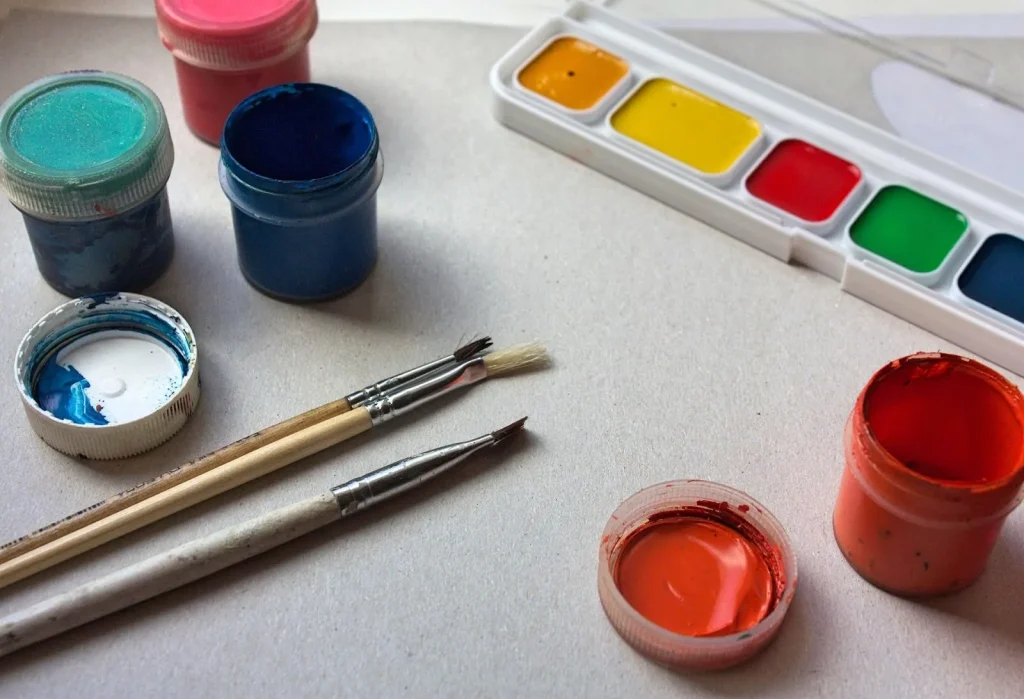
To understand gouache painting, you first need to look at its ingredients. It is made of pigment and gum arabic, just like watercolour.
However, there is a key difference in how it is made. Gouache (pronounced gwash) has a much higher pigment load and larger particles than transparent watercolour.
This density is what makes it opaque. It allows for solid coverage that hides the paper underneath, giving you bold and vibrant results immediately.
2. It Is The Most “Forgiving” Medium For Beginners
One of the biggest barriers to starting art is the fear of wasted investment or “ruining” the paper. Gouache painting solves this problem beautifully.
If you make a mistake with acrylics, it dries into plastic and stays there forever. If you make a mistake with watercolour, it is very difficult to hide.
With gouache, you can simply re-wet the paint on the paper and lift it off. You can fix “happy accidents” easily, which lowers the stakes and encourages you to take creative risks.
3. You Can Paint Light Over Dark (The Layering Advantage)
In traditional watercolour, you must preserve the white of the paper for your highlights. This requires a lot of planning and can be stressful for beginners.
What is a gouache painting good for if not breaking these rules? Because it is opaque, you can paint lighter colours directly on top of darker ones.
You can paint a dark night sky first and add bright white stars on top later. This layering capability gives you the freedom to change your mind as you create.
4. It Dries To A Photogenic Matte Finish
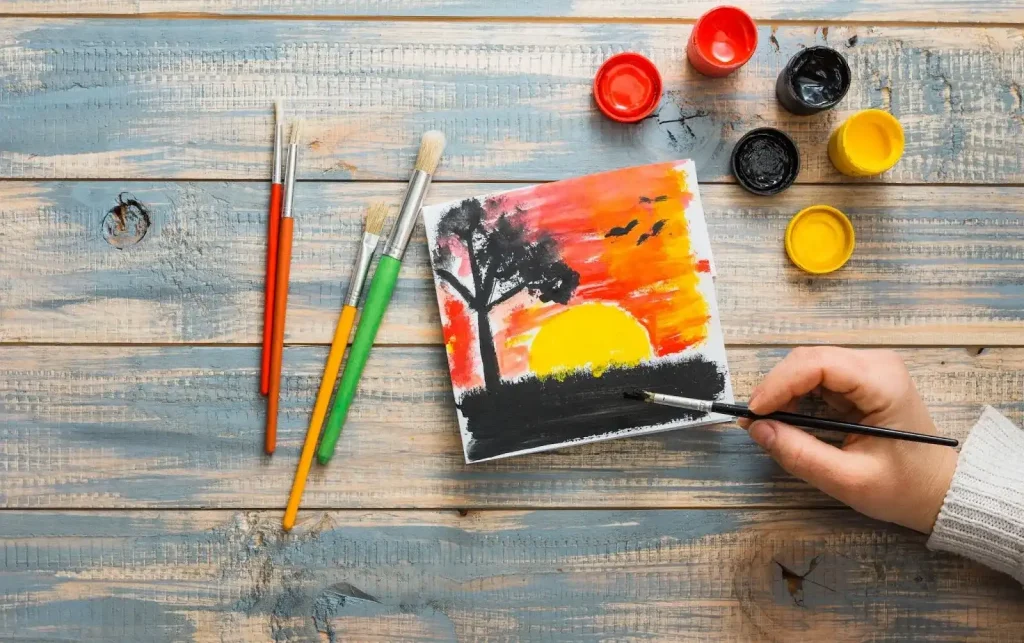
Gouache absorbs light rather than reflecting it. This results in a flat, velvety matte finish that looks incredibly smooth.
This quality makes gouache painting examples look stunning in photographs because there is no glossy glare.
It is also the preferred medium for illustrators who need to scan their work for digital design. If your child is building a portfolio for school admission, this professional finish stands out.
5. Famous Masters Used It For Serious Art
Do not let the term “poster paint” fool you. This medium has a rich history and has been used by masters for centuries.
Henri Matisse famously used gouache to create his iconic “cut-outs,” such as The Fall of Icarus. He painted sheets of paper with vibrant gouache and cut them into shapes.
Thomas Moran, the famous landscape painter, also used it for his field sketches. It is a serious medium capable of incredible expression.
6. Consistency Is Key: Think “Melted Ice Cream”
If you are wondering how to get that smooth application, it is all about water control.
If you use too much water, it will streak like weak watercolour. If you use too little, it might crack or crumble off the page.
You want a creamy consistency. Aim for a texture that feels like melted ice cream or soft butter. This allows the paint to glide effortlessly across the paper.
7. Be Aware Of The “Value Shift”
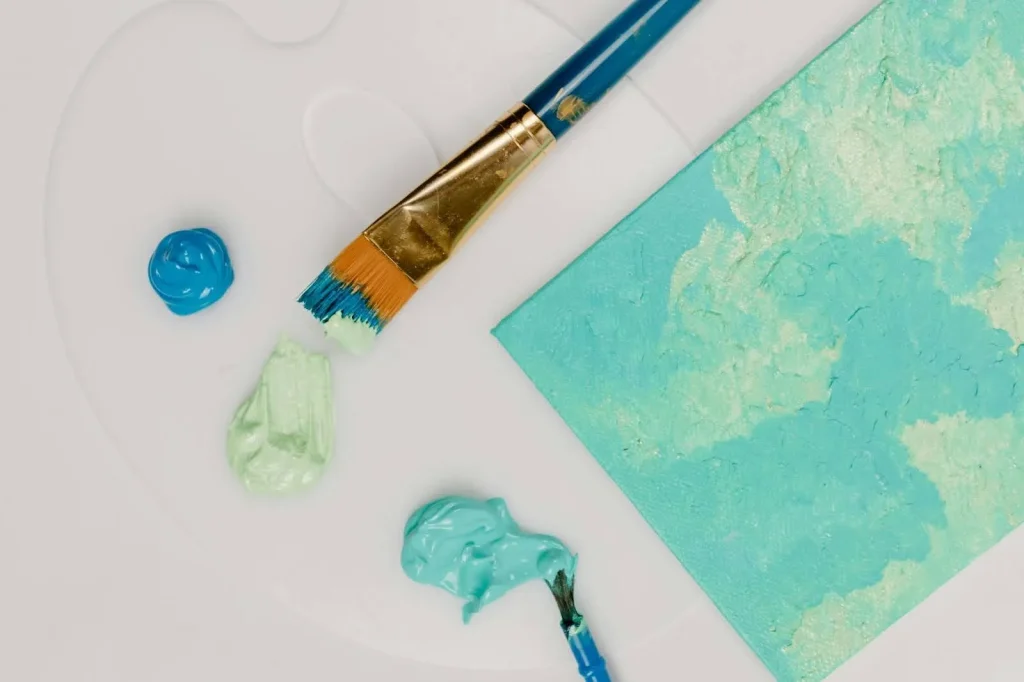
There is a slight quirk you should know about before you start. Colours in gouache painting often shift in value as they dry.
Lighter colours (like yellow or white) tend to dry slightly darker. Darker colours (like brown or navy) tend to dry slightly lighter.
This is not a defect. It is simply a characteristic of the medium that you will learn to predict with practice.
8. You Need The Right Paper Weight
Since gouache is heavier and uses water, standard sketch paper will not hold up well. It may buckle or warp under the weight of the paint.
We recommend using watercolour paper that is at least 300gsm (140lb).
You can choose Hot Pressed paper if you want a smooth surface for fine details. Cold Pressed paper is better if you prefer a bit of texture in your work.
9. There Are Two Main Types: Traditional vs. Acrylic
When shopping for supplies, you might see “Acrylic Gouache” and wonder what is gouache painting’s relationship to it.
Traditional gouache remains water-soluble even after it dries. This means you can reactivate it with water to blend edges.
Acrylic gouache has a polymer binder. Once it dries, it is permanent and water-resistant. We recommend Traditional Gouache for beginners who want that “undo” button option.
10. It Is Perfect For “Plein Air” (Outdoor) Painting
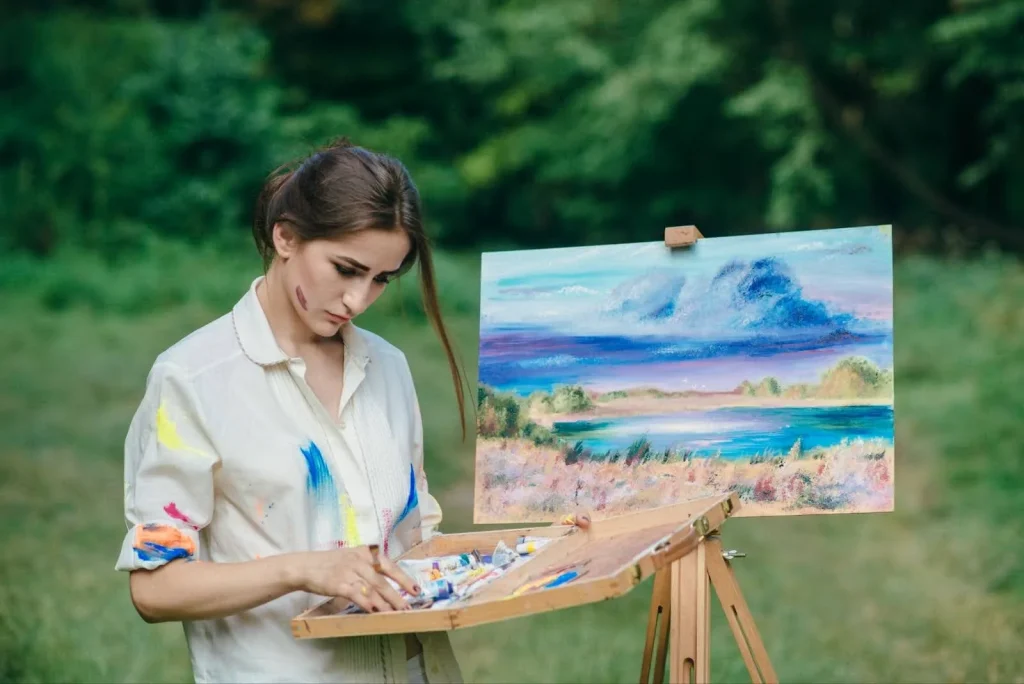
Gouache dries very quickly. This makes it the ideal companion for painting outdoors, also known as plein air painting.
You do not need to wait hours for layers to dry like you do with oil paints. You can capture a scene rapidly.
If you use an airtight palette, you can keep your squeezed paints fresh for travel. It is convenient for sketching holidays or a casual art jamming session at the park.
11. You Don’t Need Expensive Gear To Start
Many parents considering kids art classes worry about buying expensive sets only for their child to lose interest. The beauty of gouache painting is that you need very little to start.
You do not need a 50-colour set. You can mix almost any colour you need using just the three Primaries (Red, Blue, Yellow) plus Black and White.
This low barrier to entry makes it an excellent choice for learning colour theory without breaking the bank.
12. It Is Safer And Easier To Clean Than Oil
For home studios, safety and cleanliness are top priorities. Oil paints often require solvents like turpentine, which can have strong fumes.
Gouache is water-based and has very little odour.
It cleans up easily with just soap and water. If paint gets on a table, it wipes right off, making it a stress-free option for home creativity.
13. Don’t Panic If You See Clear Liquid
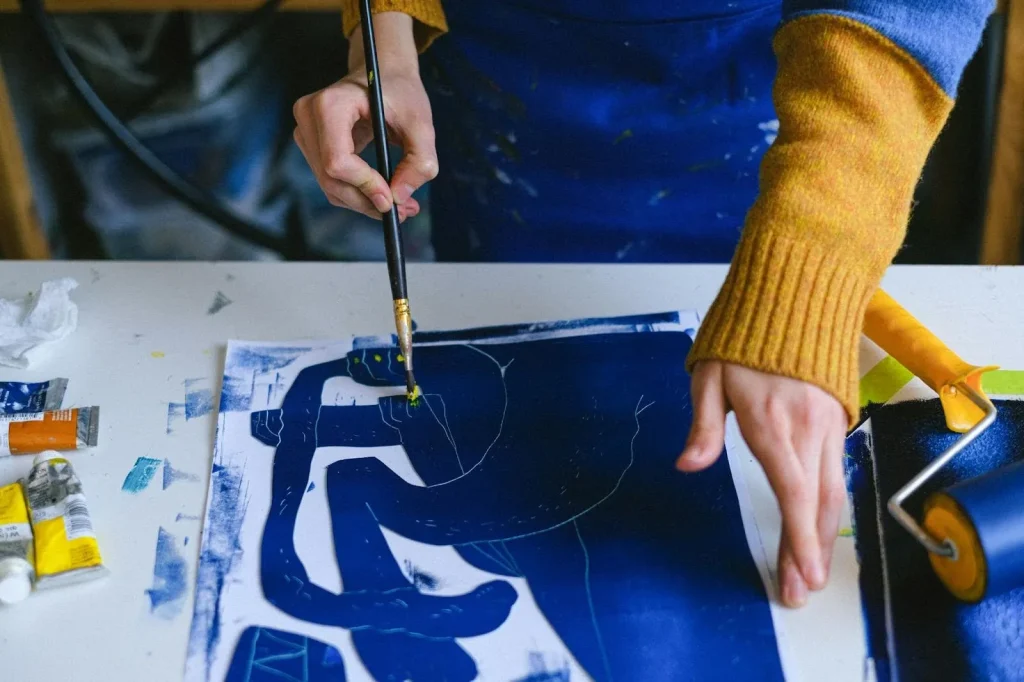
Sometimes when you open a tube, you might see a bit of clear or yellowish liquid come out first.
This is just the binder separating from the pigment. It does not mean the paint has gone bad.
Simply use a toothpick to stir it back in, or massage the tube gently before opening. It is a normal part of the process.
Conclusion About Gouache Painting
Gouache painting offers a unique blend of structure and freedom that empowers artists of all levels. You can build confidence quickly knowing that every mistake is simply a new opportunity.
Art Pazionate is dedicated to nurturing that creative spark within you. We celebrate your individuality through personalized guidance and carefully curated programs designed to help your artistic vision flourish.
Contact us today to book your trial class and start creating!
Frequently Asked Questions About Gouache Painting
Is Gouache Paint Waterproof When Dry?
No, traditional gouache remains water-soluble even after it dries, allowing you to reactivate and blend layers. If you need a permanent finish, you should look for acrylic gouache instead.
Can You Use Gouache On Canvas?
While possible, it is not recommended because gouache is brittle and can crack on flexible surfaces like canvas. It performs best on heavy watercolour paper or rigid illustration boards.
Why Is My Gouache Painting Cracking?
Cracking usually happens when the paint is applied too thickly or if there is not enough water mixed in. Aim for a creamy consistency like melted ice cream to prevent this issue.
What Is The Difference Between Gouache And Watercolour?
The main difference is opacity; watercolour is transparent and relies on the paper for light, while gouache is opaque and covers the surface. Gouache also has a heavier pigment load and dries to a matte finish.
Do I Need Special Brushes For Gouache?
You can use watercolour brushes, but synthetic flat brushes are often preferred for better control. Soft natural hair brushes might be too floppy for the heavier consistency of gouache.
How Long Does Gouache Take To Dry?
Gouache dries very quickly, typically within a few minutes depending on how thick the layer is. This makes it excellent for quick studies and outdoor painting.
Can I Mix Gouache With Acrylic Paint?
Yes, you can mix them, but the resulting mixture will likely become water-resistant once dry. This creates a hybrid paint that loses the re-wettable characteristic of traditional gouache.
What Is The Clear Liquid In My Gouache Tube?
That liquid is the gum arabic binder separating from the pigment, which is normal for tubes that have sat for a while. You can simply stir it back in with a toothpick or massage the tube before opening.